Planning a trip to Seoul? While South Korea is highly card-friendly, many popular travel experiences still require or strongly favor Korean won cash.
Renting a hanbok near Gyeongbokgung Palace, eating bindaetteok at a Gwangjang Market stall, stepping into a Life4Cuts photo booth in Hongdae, and sitting for a personal color analysis session in Sinchon all have one thing in common: each activity handles payment differently.
Whether you're exploring Gwangjang Market, topping up a T-money transit card, renting a hanbok near Gyeongbokgung Palace, or visiting one of Seoul's popular photo booths, having local currency available can help you avoid payment issues and enjoy a smoother travel experience.
This guide explains where cash is still important, where cards are commonly accepted, and why many travelers choose to secure Korean won before departure.
CXI offers Korean won through OnlineFX Home Delivery and branch pickup, allowing travelers to arrive prepared from day one.
Hanbok Rental and Photos at Gyeongbokgung Palace
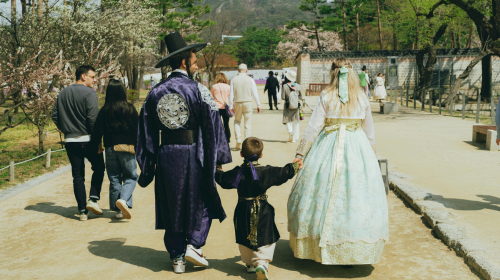
Renting a traditional Korean garment (hanbok) near Gyeongbokgung Palace is one of Seoul's signature cultural experiences. Qualifying hanbok attire can provide free general admission, subject to palace requirements; special visits and programs may need separate tickets or reservations.
You can find rental shops around Gyeongbokgung Station. Payment policies vary between operators, so confirming the specific terms of your chosen shop before visiting is important.
Reserving Online vs. Walking In
If you reserve a hanbok rental in advance, the shop will generally ask for your credit card information to hold the booking. If you feel uncomfortable giving out your credit card number, many rental places will accept cash payment in store instead.
Walk-in rental shops around Gyeongbokgung Palace are also an option. In most cases, these shops will appreciate cash over credit cards, so bring enough Korean won to cover the rental and any deposit.
Payment Considerations for Hankbok Rentals
Payment requirements vary by rental shop. Many hanbok providers accept credit cards for rental fees, but some require cash deposits that are refunded when the outfit is returned.
Before visiting, confirm whether your selected shop requires a deposit and how payment is collected.
Payment Takeaway: Hanbok Rental
Expect to provide credit card details if you reserve online. If you would rather not share your card number, pay in cash at the shop or choose a walk-in rental near Gyeongbokgung Palace, where cash is usually preferred. Bring Korean won banknotes for the deposit as well, and confirm the amount with the operator before your visit.
Eating Your Way Through Gwangjang Market
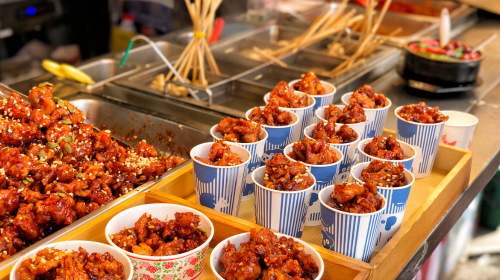
Gwangjang Market, located in the Jongno-gu district of Seoul, is one of South Korea's oldest traditional markets. The market's food section draws visitors with bindaetteok (mung bean pancakes), mayak gimbap (sesame-oil rice rolls), and other Korean street food.
Card acceptance at Gwangjang Market street stalls varies. Some vendors have card terminals. Many others accept only cash or Korean bank transfers.
Acceptance can differ from stall to stall even within the same row, and the situation has been evolving as the market responds to visitor feedback.
If you plan to eat at multiple stalls, carrying Korean won in small denominations (KRW 1,000 and KRW 5,000 notes) is the practical approach. Small notes make it easier to pay for individual snacks without relying on a vendor having change for a KRW 50,000 note.
Payment Takeaway: Gwangjang Market
Bring Korean won cash in small denominations. Card acceptance is inconsistent and may change from visit to visit. Do not assume any particular stall takes cards unless you see a terminal or ask before ordering.
Taking Life4Cuts Photos in Hongdae and Sinchon

Self-service photo booths, commonly called "four-cut photo" studios (insaeng necut), are found across Seoul neighborhoods like Hongdae, Sinchon, and Seongsu-dong. Brands such as Life4Cuts, Photoism, and Haru Film operate unmanned locations that are typically open 24 hours.
Photo booths usually take credit cards, but almost every machine or store also has a cash option or an ATM on site, since cash is still the preferred method. Your card will often work, but carrying a few KRW 1,000 notes as backup cash helps if a particular machine declines your card.
Payment Takeaway: Photo Booths
Credit cards are usually accepted, but cash is the preferred method and almost every booth has a cash option or ATM. Bring a small amount of Korean won cash as backup. Check the cash denominations accepted and whether the machine gives change before inserting banknotes.
Booking Personal Color Analysis in Seoul

Personal color analysis in Seoul offers you a beauty-focused experience built around a consultation. TIME’s reporting on personal color analysis tourism describes visitors traveling to Seoul for the experience. Book ahead and confirm language support rather than relying on a walk-in appointment. The process involves a trained consultant draping fabric swatches across your shoulders to identify which color tones complement your complexion.
Session length and take-home materials vary by program; check whether your booking includes a palette, makeup recommendations, or wardrobe guidance. Payment methods differ by studio, so verifying the specific booking and payment process with your chosen provider is necessary before committing.
Payment Considerations for Color Analysis Studios
Payment methods vary by studio. Some providers accept international credit cards, while others require online payment, deposits, bank transfers, or cash balances.
Before booking, confirm accepted payment methods directly with the studio.
Payment Takeaway: Personal Color Analysis
Check each studio's booking page for its accepted payment methods before reserving. Some studios accepts international payments while other studios don't. Do not assume every studio accepts foreign cards. Having Korean won available can help cover deposits or in-person balances when required.
Getting Between Your Seoul Activities
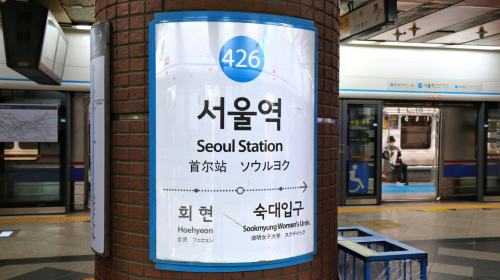
Seoul's subway system connects Gyeongbokgung Palace (Line 3), Gwangjang Market (Lines 1 and 5 at Jongno stations), Hongdae (Line 2 and the Airport Railroad), and Sinchon (Line 2) within a compact transit network. The system is efficient, well-signed in English, and covers the full itinerary described in this guide.
For subway and bus travel, the standard approach for international visitors is a physical T-money card, available at convenience stores (GS25, CU, 7-Eleven, emart24) and some subway station kiosks. T-money cards are topped up with Korean won cash at these same locations.
Foreign-issued credit and debit cards do not work for tap-to-ride at most subway turnstiles. Some newer ticket kiosks at select stations accept international cards for purchasing single-use tickets, but availability varies. Check current transit card options and alternatives through the Korea Tourism Organization’s transportation guide before your trip, as the payment options for international visitors are actively being expanded.
Payment Takeaway: Seoul Transit
Budget Korean won cash for purchasing and topping up a T-money card. The amounts needed depend on how frequently you ride and which routes you take. Keep a reserve of small-denomination notes (KRW 1,000 and KRW 5,000) for convenience store top-ups.
Planning Your Korean Won Around Your Itinerary
There is no single amount of Korean won that works for every traveler. The right amount depends on your itinerary, how often you plan to use public transportation, and whether you'll be visiting places that prefer cash payments.
In Seoul, many restaurants, retailers, and tourist attractions accept credit cards. However, carrying Korean won can be helpful for Gwangjang Market food stalls, T-money card top-ups, hanbok rental deposits, and other small purchases where cash may be preferred.
When planning your travel budget, separate expenses into three categories:
- Prepaid expenses, such as hotels, tours, or activity reservations
- Expected spending, including meals, transportation, and shopping
- Backup cash, for situations where cards are not accepted
Many travelers choose to carry enough Korean won to cover transit, market purchases, and other everyday expenses while relying on credit cards for larger purchases.
For a step-by-step approach to estimating how much foreign currency you may need, read How Much Foreign Currency Should You Actually Bring?
Cash, Cards and ATMs
South Korea has a modern banking network, and many ATMs accept international cards. However, ATM withdrawals may involve bank fees, operator fees, or currency conversion charges depending on your card provider.
Because payment needs vary throughout a trip, many travelers obtain at least some Korean won before departure and use cards or ATMs as needed once they arrive.
Preparing Currency Before Your Departure
South Korea's payment landscape is modern and card-friendly, but many everyday travel experiences still involve cash. Gwangjang Market food vendors, T-money card top-ups, hanbok rental deposits, and certain small businesses may prefer or require Korean won.
Arriving with local currency already in hand can help you navigate transportation, markets, and activities without needing to locate an ATM or exchange counter immediately after landing.
Before your trip, review the payment requirements for the activities on your itinerary and consider carrying a mix of payment methods, including Korean won cash and an international credit card.
CXI offers Korean won through OnlineFX home delivery and branch pickup, making it easy to secure your currency before departure. Whether you're exploring Seoul's markets, using public transportation, or visiting popular attractions, having Korean won available from day one can help you travel with greater confidence and flexibility.
A Note on Tipping in South Korea
Tipping is generally not customary in South Korea, so do not automatically add a U.S.-style percentage to a restaurant bill, ordinary taxi fare, or activity payment. Check what your booking includes: a stated service charge, interpreter fee, or optional extra is different from a voluntary gratuity.
FAQs About South Korea Travel Money
Do I need cash for Gwangjang Market in Seoul?
Yes. Korean won cash is the most reliable payment method at Gwangjang Market. While some vendors accept cards, many food stalls still prefer or require cash. Bringing small-denomination banknotes such as KRW 1,000 and KRW 5,000 notes makes it easier to purchase street food, snacks, and drinks without worrying about card acceptance.
Can I pay for hanbok rental with a credit card near Gyeongbokgung?
Many hanbok rental shops accept credit cards for rental fees, but cash may still be required for deposits or certain walk-in transactions. Because payment policies vary by shop, it's a good idea to carry Korean won as a backup payment method. Having local currency available can help avoid delays if a shop requires a cash deposit or does not accept your preferred card.
Do Life4Cuts photo booths accept foreign credit cards?
Many Life4Cuts and other self-photo booths accept international credit cards, but not every machine processes foreign cards consistently. Carrying a small amount of Korean won provides a simple backup option and can help prevent interruptions during your visit.
How do I pay for personal color analysis in Seoul as a tourist?
Payment methods vary by studio. Some accept international credit cards, PayPal, or online payment platforms, while others may require bank transfers, deposits, or cash balances. Before booking, confirm the studio's current payment requirements and keep Korean won available in case an in-person payment cannot be completed by card.
Can I use my international credit card on the Seoul subway?
In most cases, no. Foreign-issued credit cards generally do not work for tap-to-ride access on Seoul's subway system. Most visitors use a T-money card, which is typically purchased and reloaded using Korean won. Having local currency available from the start of your trip can make transportation much easier.
Is tipping expected in South Korea?
No. Tipping is generally not customary in South Korea. Restaurants, taxis, hotels, and most activity providers do not expect gratuities. Travelers can focus their Korean won budget on transportation, food, shopping, and activities rather than setting aside extra funds for tipping.
Where can I order Korean won before my trip?
Travelers can obtain Korean won through banks, airport exchange counters, and foreign currency exchange providers. For travelers who want local currency before departure, CXI offers Korean won through OnlineFX Home Delivery and branch pickup, making it possible to arrive in South Korea with currency already in hand. This can be especially helpful for transit expenses, market purchases, deposits, and other cash-preferred situations encountered early in a trip.