Traveling Internationally: Visa Requirements for U.S. Travelers
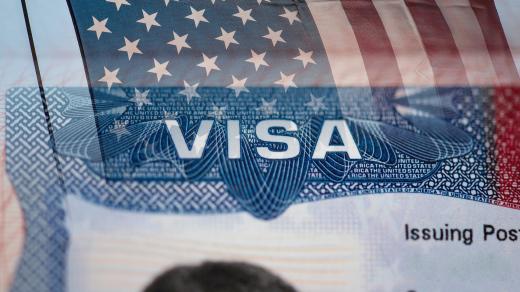
Before traveling abroad, it's important to do some legwork to ensure you can enter the country you're planning to visit. Specifically, you may need to apply for a travel visa, which outlines your travel intentions within a country and stipulates the duration of your trip.
Not all countries require this type of travel authorization, but those that do require you to present your entry requirements alongside your U.S. passport. In addition to confirming that your passport has not expired — and, in some instances, going so far as to ensure that it will be valid for as many as six months beyond your proposed travel dates — it's crucial to apply for a visa well in advance of booking your flight and making other travel arrangements.
This guide breaks down the different types of travel authorizations, explains common entry requirements for U.S. passport holders, and outlines what to know before visiting some of the world's most popular destinations.
The Importance of Securing a Travel Authorization
Countries around the world have established entry requirements for international travelers. A travel authorization is a government's way of formally tracking and recording visitors who enter a country for travel, work, or leisure. In conjunction with the U.S. embassy, the U.S. Department of State provides a helpful tool that allows you to research entry requirements and learn about any travel advisories currently in effect.
Sometimes, visa requirements for U.S. travelers can be confusing. If you are planning a trip to Nepal, for instance, you must obtain a travel visa to gain entry. On the other hand, you can visit a country like Morocco visa-free as long as you intend to stay no longer than 90 days. And let's not forget ETAs, which must be secured before traveling. Here's the difference between visa-free travel, ETAs, traditional visas, and visas on arrival:
-
Visa-free travel: Many countries, including Argentina, Japan, and South Africa, offer U.S. citizens visa-free travel. In this case, you'll be permitted to enter these and other visa-free countries without needing to procure a visa in advance. You must, however, still present your passport at your point of entry and abide by the time limit that has been instated. A majority of visa-free countries permit you to stay for up to 90 days. Others, like the Philippines and Thailand, allow you to stay for up to 30 days and 60 days, respectively.
-
Electronic travel authorization (ETA): An ETA is linked to your U.S. passport. Countries such as New Zealand require travelers from visa-free countries to obtain an electronic travel authorization online before departure. For visits to the UK, you can apply for an ETA for tourism, family visits, business meetings, or short-term study, but it does not guarantee entry. The best way to differentiate between a traditional visa and an ETA is to regard the visa as the document that grants you entry and the ETA as the document that gives you permission to travel to the country in the first place. Compare it to attending an exclusive dinner party: the ETA is like a formal invitation, and the visa is the document you need to show at the door to get in.
-
Visa on arrival: A few countries issue visas upon arrival at their ports of entry. This could be an airport, seaport, or land checkpoint. An example of a country that will issue you a visa upon arrival is Egypt, which issues U.S. travelers a 30-day visa for a fee payable in U.S. dollars.
-
Traditional visa: If the country you're planning to visit requires a traditional visa, you must apply for one before your trip. Research the country you're visiting and follow the visa application instructions outlined by its embassy or consulate. Keep in mind that visa applications are usually complex (be prepared to upload several documents), and you will be responsible for remitting a processing fee. It could take anywhere from days to weeks to receive your visa.
Popular Destinations: What to Know Before You Go
Here are some popular destinations and their entry requirements. Please note that this information is subject to change at any time, and all the information that appears below was obtained through the U.S. State Department's "Learn about your destination" search tool. The U.S. Department of State recommends that you "check with the foreign embassy of your destination for the most up-to-date requirements."
Track your favorite currency's exchange rate to know when you get more. CXI Rate Tracker.
Europe (Schengen area)

-
No ETA required.
-
No fee required.
-
The Schengen Borders Agreement sets the same immigration rules for 29 European countries. This means you can travel freely between them.
-
You can stay up to 90 days during any 180-day period, but you must wait another 90 days before applying to re-enter the Schengen area. For stays longer than 3 months, a visa is required.
United Kingdom of Great Britain and Northern Ireland

-
ETA required; fee is £16
-
Maximum length of stay with ETA: 6 months
-
Currency declaration limit: £10,000 or more for the UK. Same rules for Northern Ireland.
Japan

-
Visa-free; no visa required for stays of fewer than 90 days.
-
Currency declaration limit: 1,000,000 JPY or more.
-
If you visit Japan, consider taking a bullet train! These trains are known to travel nearly 200 miles per hour, and rumor has it that they're so smooth you can balance a coin on a table or windowsill.
South Korea

-
Visa-free; no visa required for stays of fewer than 90 days if traveling only for tourism or business.
-
The Korean Electronic Travel Authorization (K-ETA) exemption for U.S. passport holders was extended through December 31, 2026. Starting January 1, 2027, you will need a K-ETA before traveling to South Korea.
-
No currency declaration limits.
Canada

-
Visa-free; no visa required for stays of fewer than 180 days.
-
Currency declaration limit: 10,000 CAN or more.
-
U.S. travelers should take heed of Canada's strict gun laws. The U.S. embassy notes that "gun-related arrests at border stations are common."
Australia

-
Visa or ETA required; the fee to apply for an ETA is 20 AUD
-
Australia's ETA allows you to visit the country as often as you wish within a 12-month period, and you can stay up to 3 months at a time
-
Currency declaration limit: 10,000 AUD or more
Mexico

-
Visa-free; no visa required for stays of fewer than 180 days.
-
Currency declaration limit: 10,000 USD or more.
-
Planning a trip to Mexico sometime soon? You may want to add Coyoacán to your itinerary. Mexico City's oldest neighborhood is a charming gem full of stunning architecture and art. In fact, it's also home to La Casa Azul, the former home of Frida Kahlo and Diego Rivera, which was converted into a vibrant and beloved museum.
Vietnam

-
Visa required.
-
U.S. citizens can apply online for an E-visa on the Vietnam Immigration website. Applicants may apply for single or multiple-entry visas.
-
Currency declaration limit: 15,000,000 VND or more.
Brazil

-
Visa required.
-
U.S. citizens can visit the Brazilian Ministry of Foreign Affairs website for more information about obtaining a visa.
-
Currency declaration limit: 10,000 BR or more.
-
According to the United Nations Environment Programme (UNEP), an average of 700 new animal species are discovered every year in Brazil. National Geographic emphasizes that there's no shortage of eco-friendly adventures awaiting travelers of all ages. A trip to the Pantanal, for example, will put you inside the world's largest wetlands and give you the unique opportunity to view giant anteaters, hyacinth macaws, capybaras, and other creatures in their natural habitats.
China

-
Visa required (traveling without a visa, carrying an expired visa, or overstaying your visa will result in detention and/or fines).
-
If traveling to the Tibet Autonomous Region (TAR), you must obtain a special permit for tourist travel.
-
Citizens of the United States and certain other countries can enter the province of Hainan visa-free for up to 30 days for tourism, temporary commercial and trade activities, medical treatment, exhibitions, and sports competitions, but not for work or study. Travelers must arrive by direct international flight or via Hong Kong or Macau.
-
Currency declaration limit: 20,000 RMB.
India

-
Visa required; travelers must enter with a visa in their passport or use an e-Tourist visa. The latter is permitted for entry only at certain international airports and seaports.
-
Currency declaration limit: 5,000 USD.
Assess and Make Progress
No matter where you're planning to travel, you're now equipped with the information you need to begin assessing your destination's entry requirements. Planning ahead will make all the difference and can help ensure a stress-free travel experience.
While conducting your research, you'll encounter other common entry requirements that certain countries have enacted. South Africa, for instance, requires international travelers to receive the yellow fever vaccine 10 days prior to their arrival. Otherwise, they could be denied entry or quarantined
Remember to order currency before you fly! Over 80 currencies covering 120 countries available for secure home delivery via FedEx/UPS or pick up at a branch near you. Use our exchange rate tracker so you never miss another rate drop.

Currency Exchange International (CXI) is a leading provider of foreign currency exchange services in North America for financial institutions, corporations, and travelers. Products and services for international travelers include access to buy and sell more than 80 foreign currencies, gold bullion coins and bars. For financial institutions, our services include the exchange of foreign currencies, international wire transfers, purchase and sale of foreign bank drafts, international traveler’s cheques, and foreign cheque clearing through the use of CXI’s innovative CEIFX web-based FX software www.ceifx.com